
South Africa’s green bar-coded ID book remains a valid identity document unless the Department of Home Affairs announces a formal change. Here’s what to know about its status, the Smart ID Card, and how to check official updates.
South Africans who still use the familiar green bar-coded identity document often ask the same question: When does the green ID book expire? The answer is important for everyday tasks, from opening a bank account to applying for a service or travelling within the country.
At the time of writing, there is no confirmed nationwide end date requiring every holder to replace a green ID book with a Smart ID Card. The green book has not automatically become invalid simply because newer identity documents are available. However, Home Affairs has been encouraging eligible citizens to apply for the Smart ID Card, and individual institutions may have their own requirements for particular transactions.
Because identity-document policy can change, check the latest information directly with the Department of Home Affairs before making plans. This guide explains what the green ID book’s status means, when replacement may be necessary, how to apply for a Smart ID Card, and where to find reliable updates.
Important: This article is general information, not legal or official Home Affairs advice. Always confirm current requirements with the relevant government office or institution.
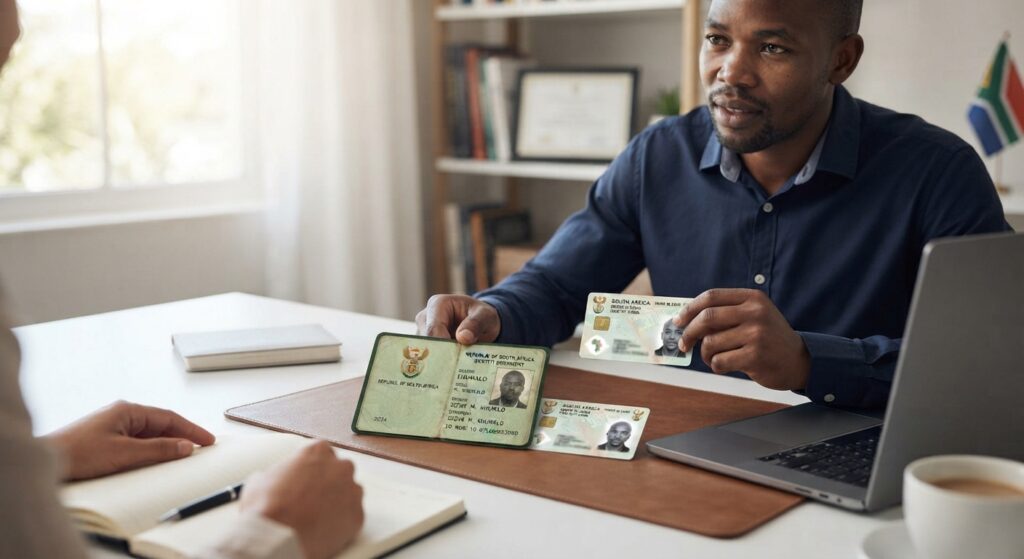
Is there an official end date for the green ID book?
There is no general expiry date printed on the green bar-coded ID book, and no universal replacement deadline should be assumed unless Home Affairs formally announces one. The introduction of the Smart ID Card did not, by itself, mean that all green books became invalid overnight.
That distinction matters. A government may introduce a newer document while continuing to recognise an older one. A future phase-out, if announced, could include a transition period and instructions for affected residents. Until then, the safest approach is to keep your current document secure and in good condition, while checking whether the organisation you are dealing with accepts it for the service you need.
Avoid relying on viral social media posts, forwarded messages, or headlines that do not link to an official announcement. Claims that everyone must replace a green book by a particular date should be verified through the Department of Home Affairs or its official communication channels.
Can you still use a green ID book?
In many situations, a valid green bar-coded ID book continues to serve as proof of identity. But acceptance can depend on the transaction, the organisation’s verification process, and whether the document is damaged or the details are readable.
For example, a bank, employer, government department, or service provider may ask for additional documents or use its own identity-verification procedures. That does not necessarily mean the green book has been nationally cancelled. It may reflect the organisation’s rules for that specific service.
Before visiting an office or submitting an application, check:
- Whether the organisation accepts the green bar-coded ID book.
- Whether your document must be original, rather than a copy.
- Whether you need proof of address or other supporting documents.
- Whether an appointment is required.
- Whether your personal details match the records held by the institution.
If your green book is lost, stolen, badly damaged, or contains outdated information, contact Home Affairs for guidance on the correct replacement or amendment process. Do not assume that a photocopy, photograph, or temporary document will be accepted everywhere.
Why is South Africa moving towards Smart ID Cards?
The Smart ID Card is the newer identity document issued by Home Affairs. It is designed to be more durable and includes security features intended to make it harder to alter or counterfeit than the older booklet format.
The card is also more convenient to carry and store. Unlike a booklet, it fits into a wallet, and it is less likely to have pages torn or become difficult to handle through everyday use. These practical advantages are among the reasons many people choose to apply for one even when their green book remains usable.
The Smart ID Card is part of a broader shift towards modern identity services. But modernisation does not automatically mean that existing documents are invalid. The legal status of a document and the convenience of replacing it are separate questions.
If you are eligible and would prefer to have a card, you can look into applying through Home Affairs. Check the department’s current instructions first, since application steps, participating offices, fees, and appointment arrangements may change.
Who should consider applying for a Smart ID Card?
You may want to apply if:
- Your green book is lost, stolen, damaged, or difficult to read.
- You need to update personal details and Home Affairs advises that a new document is required.
- You prefer a card-format document that is easier to carry.
- A particular institution has asked you to provide a Smart ID Card for a specific service.
- You are applying for your first South African identity document and are eligible for the card.
If your green book is in good condition and you are not facing a transaction that requires a different document, there may be no need to panic or rush solely because of an unverified deadline claim. Confirm your own circumstances with Home Affairs or the organisation requesting identification.
How to apply for a Smart ID Card
Application procedures can change, so use the latest instructions from Home Affairs rather than relying on an old checklist. Generally, applicants should expect to provide personal information and supporting documents, have their details captured, and follow the department’s process for collection or delivery.
A practical preparation checklist:
- Check eligibility and requirements. Start with the Home Affairs website or contact the relevant office.
- Confirm whether an appointment is needed. Some services may be available only at selected offices or through specific booking arrangements.
- Gather supporting documents. Requirements depend on whether this is a first application, a replacement, or a change to your details.
- Use official channels. Be cautious of people who offer to secure an appointment or document in exchange for unofficial payments.
- Keep any receipt or reference number. You may need it to follow up on the application.
- Confirm collection arrangements. Ask whether collection is in person and what identification you must bring.
Do not publish your ID number, application reference, or a photograph of your identity document in public comments or social media posts. These details can be misused.
What if your green ID book is lost or stolen?
Report a stolen identity document to the appropriate authorities and contact Home Affairs for instructions on applying for a replacement. If you suspect that someone is using your details, contact the relevant organisations promptly and keep records of your reports and correspondence.
If the document is merely misplaced, avoid sharing images of it online while asking for help. A photo of an ID can expose sensitive personal information. Use official channels and trusted contact details when seeking assistance.
For additional reporting and consumer-safety information, you can also consult the South African Police Service and the Information Regulator for guidance relevant to crime reporting and personal-information protection.
How to spot false claims about a replacement deadline
A misleading post may use urgent language such as “all green IDs cancelled tomorrow” or “you will lose your benefits unless you pay an agent.” Before sharing or acting on a claim, ask:
- Does it link to an official Home Affairs announcement?
- Is the date clearly stated by a government source?
- Does the message explain who is affected and what steps are required?
- Is someone asking for payment through a personal account or messaging app?
- Have reputable news organisations independently reported the same announcement?
A real nationwide policy change should be supported by clear official information. If you cannot find the claim on Home Affairs’ official channels, treat it cautiously and contact the department directly.
What should you do now?
If you have a green bar-coded ID book, first check that it is safe, legible, and available when needed. Then:
- Do not discard it unless Home Affairs instructs you to do so.
- Check acceptance requirements before an important appointment or application.
- Apply for a Smart ID Card if you want one or need a replacement, following current official instructions.
- Watch for formal announcements about any future transition or deadline.
- Protect your personal information by keeping copies secure and avoiding public sharing.
For related coverage, see more South Africa news on abcnews.co.za. You can also link this guide to relevant articles on your site, such as your Home Affairs updates, South African document guides, or public-service explainers.
- How to apply for a Smart ID Card
- What to do if your South African ID is lost
- Latest Home Affairs news and updates
Useful official links
- Department of Home Affairs
- South African Government services
- South African Police Service
- Information Regulator of South Africa
YouTube videos
You can embed official or reputable videos that explain Smart ID Card applications or Home Affairs services. Choose and verify the videos before publishing; the examples below use YouTube search results rather than fixed video IDs, so they will not display as playable embeds until you replace them with specific video URLs.
Smart ID Card and Home Affairs information
Frequently asked questions
Has the green ID book expired?
There is no general expiry date printed on the green bar-coded ID book, and no nationwide end date should be treated as confirmed without an official announcement. Check current Home Affairs guidance and the requirements of the organisation you are dealing with.
Do I have to replace my green ID book with a Smart ID Card?
Do not assume that you must replace it immediately. The Smart ID Card is the newer format, but any compulsory replacement programme or deadline should be confirmed through official Home Affairs information.
Can a bank refuse my green ID book?
An institution may apply its own verification rules for a particular service. Contact the bank in advance and ask what documents it accepts. A refusal for one transaction does not, on its own, prove that the green book has been nationally cancelled.
Is the Smart ID Card better than the green book?
The card is more compact and designed with modern security features. Whether you need one now depends on your circumstances and the current requirements for the services you use.
Where can I check for an official deadline?
Start with the Department of Home Affairs and the South African Government website. Be wary of messages that state a deadline but do not provide a verifiable official source.
The bottom line
There is no confirmed universal end date for South Africa’s green bar-coded ID book in the information covered by this guide. The Smart ID Card is the newer format, but that does not automatically mean every green book has been cancelled. Keep your document secure, check requirements before important transactions, and rely on Home Affairs for any formal announcement about replacement deadlines..